Featured Showcases
The current generation, in full.
Difficult Historical Audio · Review-Driven
Nixon Exhibit 21 — Difficult Historical Audio
A difficult historical recording transformed into a structured, searchable and reviewable record — with synchronized source access, speaker structure, diagnostic review regions and a source-aligned transcript.
Source audio · Transcript · Chapters · Speaker structure · Review map · Targeted review
Open Nixon Showcase →Legal Long-Form · Structured Review
Kennedy v. Braidwood — Long-Form Legal Audio
A full-length legal recording transformed into a structured, searchable and reviewable record with synchronized audio, chapter navigation, speaker-aware sections and direct access to the source.
Long-form audio · Structured transcript · Chapters · Speaker navigation · Review visibility
Open Braidwood Showcase →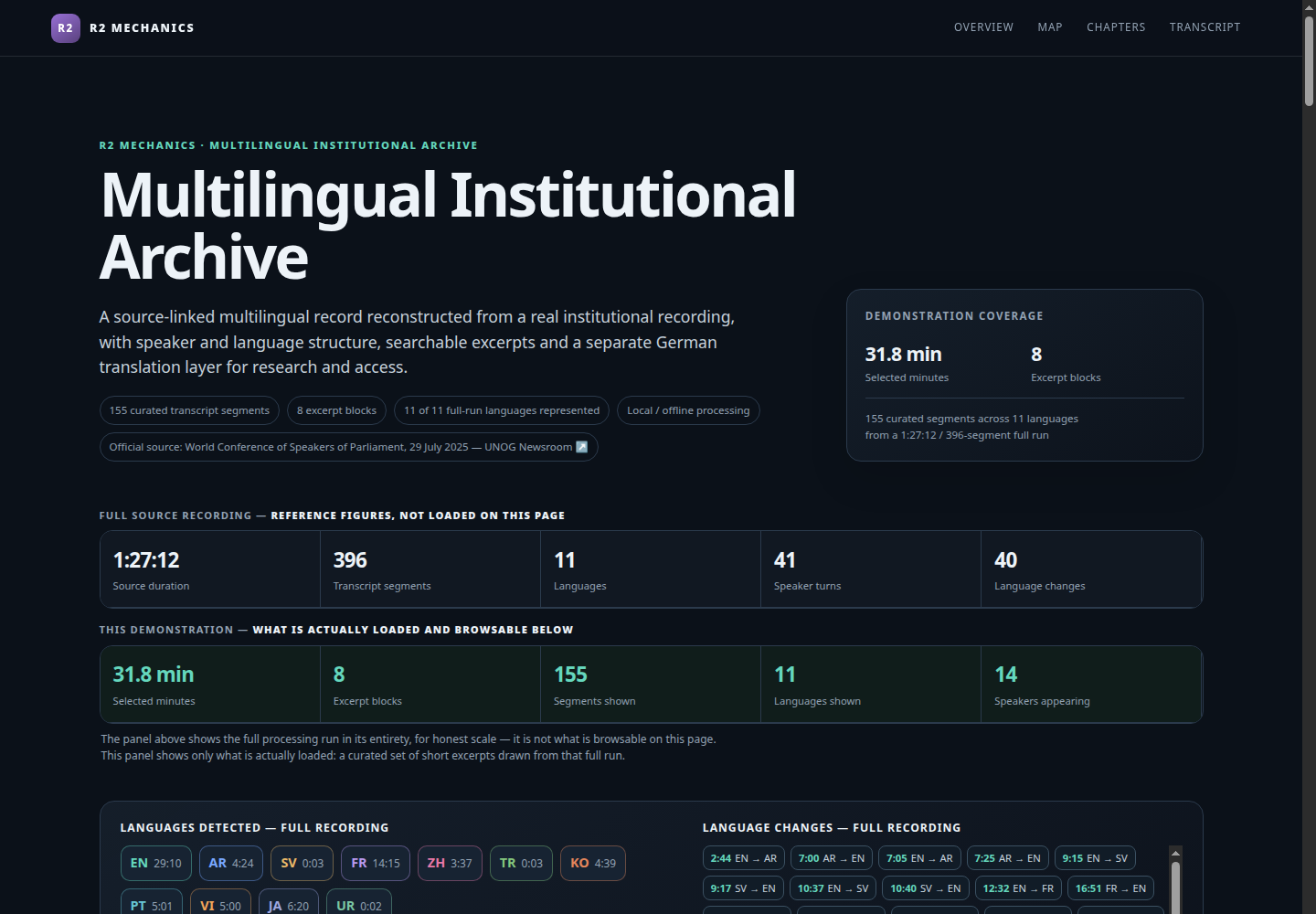
Multilingual · Speaker-aware · Translation layer
Multilingual Institutional Archive
A long-form institutional recording reconstructed across multiple languages and speakers, with source-linked excerpts, language and speaker navigation and a separate German translation layer for research and access.
1:27:12 source duration · 11 detected languages
Open Multilingual Showcase →